




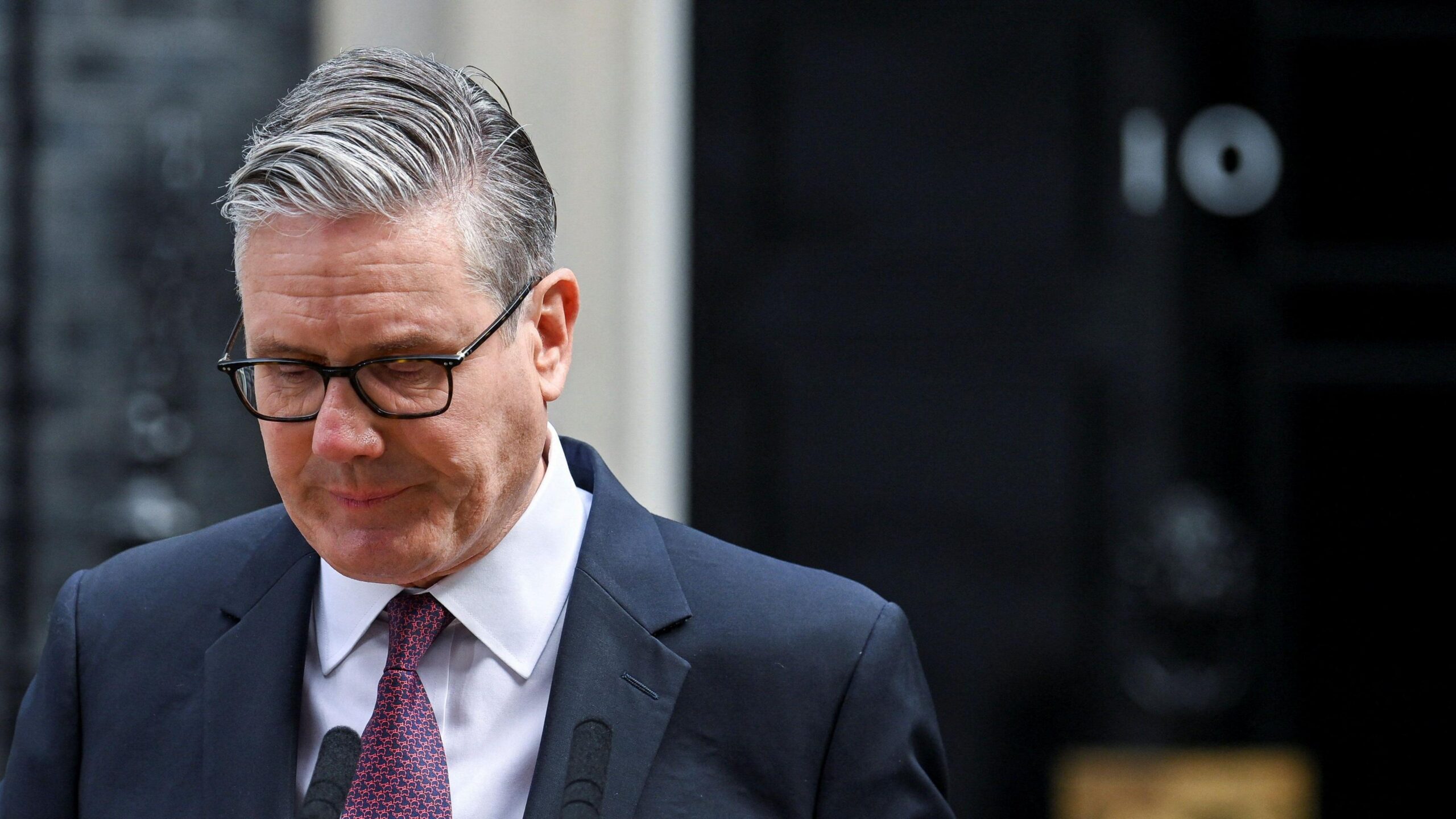
On the morning of June 22, 2026, British Prime Minister Keir Starmer walked out of 10 Downing Street, visibly emotional, and announced his resignation to the world.
The announcement clears the path to power for Starmer’s likely successor, Andy Burnham, the popular ex-mayor of Greater Manchester who secured a return to Parliament just last week.
This wasn’t a surprise since it was the culmination of nearly two years of political chaos, scandal, and a governing party turning on its own leader.
He will be the sixth prime minister to leave office in the past 10 years but why does this keep happening?
And what does it mean for Nigerians in the UK and the hundreds of thousands caught up in bilateral deals signed just months ago?
Here is a timeline of Starmer’s ascent to leadership to his resignation
• July 2024: Labour won the 2024 general election with a landslide majority of 172 seats, ousting the Conservatives after 14 years in office.
• End of 2025: Starmer’s approval ratings after 14 months became the lowest of any prime minister in the past 50 years. Over the same period, support for his Labour Party dropped by nearly 14 points. This is the second-largest decline for a governing party in postwar political history. A YouGov poll found only 18% of Britons had a favourable opinion of Starmer, while 72% were unfavourable.
• May 2026: Labour suffered catastrophic losses in local elections. Reform took about 26 percent nationally, followed by the Greens (18 percent), Conservatives (17 percent), and Labour (17 percent).
• Mid-May 2026: Over 95 Labour MPs had called on Starmer to resign. Health Secretary Wes Streeting and four junior ministers resigned in protest.
• June 18, 2026: Andy Burnham won the Makerfield by-election with almost 55% of the vote, decisively defeating Reform UK’s candidate.
• June 22, 2026: Starmer resigns.
The June 18, 2026 Makerfield by-election was historic: sitting Labour MP Josh Simons resigned voluntarily to hand Andy Burnham a path back to the Commons, a vacancy strategy unseen since 1965.
Makerfield, a working-class, 65% Leave-voting constituency in Greater Manchester, is prime territory for Reform UK, who had swept its local council wards just weeks prior with 50% of the vote. A knife-edge result was expected.
Instead, Burnham won decisively with 54.8% (24,937 votes) against Reform UK’s 34.5%, stretching Labour’s majority beyond its 2024 margin on a remarkably high 58.8% turnout.
By beating Reform in its own backyard, Burnham proved he could protect Labour’s northern heartlands from Nigel Farage’s movement. The victory returns Burnham to Parliament for the first time since 2017, unlocking his eligibility for the Labour leadership and making Keir Starmer’s subsequent exit announcement a matter of days.
Starmer’s collapse was a cascade of crises:
• The Mandelson Scandal: In December 2024, the government appointed prominent New Labour figure Peter Mandelson as British Ambassador to the US. In September 2025, the extent of Mandelson’s relationship with convicted child sex offender Jeffrey Epstein became widespread as the Epstein files were released. Starmer dismissed Mandelson and said he regretted the appointment.
• Welfare Reform Reversals: The government was forced into humiliating retreat on policies such as an inheritance tax on agricultural land, winter fuel payments to elderly people, and reforms to the welfare system.
• Defence Splits: In June 2026, the crisis deepened following disputes over the government’s planned defence spending, which resulted in three resignations in the Ministry of Defence: Defence Secretary John Healey, junior minister Al Carns, and a ministerial aide.
• “Freebiegate”: Early controversy arose as Starmer and his ministers were accused of failing to declare gifts and accepting over £20,000 worth of free tickets to see Taylor Swift.
The cumulative weight proved fatal.
The UK is marching towards its seventh prime minister in a decade because it remains trapped by a failed Brexit that neither citizens nor political leaders have been able to make work.
The numbers are stark:
• Brexit may have reduced UK GDP per head by as much as 8% by the start of 2025. This is a loss equivalent to £3,300 per person in 2024.
• The cost of living has increased by 20% in the past four years alone.
• Higher import costs raised the cost of living; the fall in sterling is estimated to have increased consumer prices by around 3%, costing the average UK household £870 per year.
• The UK had five Prime Ministers in the 35 years before the June 2016 Brexit referendum. Since then, it has had six, which seems likely shortly to become seven.
Brexit fractured the old two-party system entirely.
Britain’s 10-year switching of prime ministers shows a definitive collapse of old political loyalties and the de-facto two-party system.
As the May 2026 elections demonstrated, the new multi-party politics are here to stay, with both the right and left blocs breaking down in response to voter dissatisfaction with Labour and the Conservatives.
Reform UK, led by Nigel Farage, is now the single largest political force by vote share in local elections. Reform UK topped the polls for over a year, while the Green Party has also surged.
The narrow political strait Starmer operated in was bounded on the right by Reform UK and immigration, and on the left by the Liberal Democrats and Greens and the vexed question of EU membership. He couldn’t chase Reform on immigration without destroying his political base, while pushing to rejoin the EU would, in his view, be too divisive.
He was, effectively, boxed in from all sides.
For nearly a century, British politics was a binary race. Under the First-Past-the-Post (FPTP) system, Labour and the Conservatives routinely captured 85–95% of the vote, delivering stable, decisive majorities.
Today, that machinery is broken as the 2024 general election exposed deep cracks when the two main parties won their lowest combined vote share ever under universal suffrage. By the May 2026 local elections, the system truly fractured: the combined Tory-Labour vote plummeted to a historic low of 37.7%, and they remained the top two choices in only 16% of constituencies.
This collapse is driven by a highly fragmented electorate. Ten years after the Brexit referendum, the Leave/Remain divide still dictates alignment, with voters shifting fluidly between five major parties (Labour, Conservative, Reform UK, Liberal Democrats, and the Greens) depending on regional issues like immigration or housing.
With five parties now polling above 12% nationally, FPTP (a winner-take-all system built for two parties) is under severe strain. Lacking a coalition culture, Britain’s adversarial political system faces an unstable future it was never designed to handle.
• Andy Burnham: The overwhelming frontrunner. Burnham, 56, nicknamed “King of the North,” is seen as Labour’s biggest electoral asset. He won the Makerfield by-election by a margin of over 9,000 votes against Reform UK.
• Wes Streeting: The former Health Secretary resigned in May saying “where we need vision, we have a vacuum.” He has said he will run in a leadership contest if there is one.
• Other Names in the Frame: Other potential candidates include former Deputy Leader Angela Rayner, Energy Secretary Ed Miliband, and former Armed Forces Minister Al Carns.
• The Process: Under Labour rules, candidates need the support of 20% of Labour MPs to be considered. If more than one clears that threshold, a vote will be held among party members and supporters.
• Nominations open July 9, 2026.
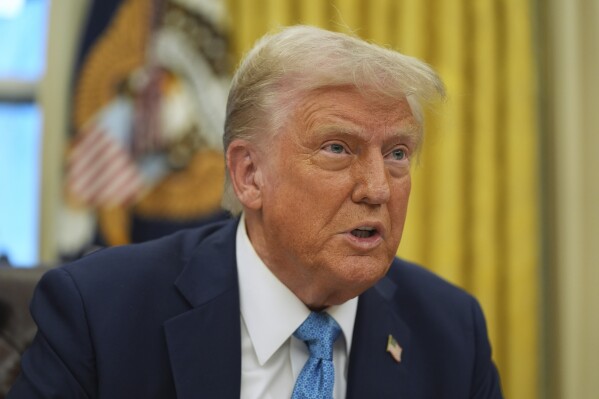
One of the more extraordinary moments of this saga was when US President Donald Trump said the prime minister would be resigning in a Truth Social post on Sunday, before the official announcement. “Keir Starmer will resign as Prime Minister of The United Kingdom. He failed badly on two very important subjects — IMMIGRATION AND ENERGY (OPEN NORTH SEA OIL!). I wish him well!”
Starmer’s initially warm working relationship with Trump was soured by his decision to keep Britain out of the Iran war.
Internationally, Starmer earned more credit than he received at home. But in Westminster politics, optics at home always win.
Starmer’s exit creates deep uncertainty for Nigeria, as his government was directly shaping ties across three major pillars:
• The March 2026 State Visit: Tinubu’s historic visit to Windsor Castle secured a £746 million port financing deal and solidified an £8.1 billion bilateral trade relationship.
• The Deportation MoU: A new agreement accelerated the return of undocumented Nigerians by allowing the UK to use “letters” as identification instead of passports. Over 2,000 Nigerians were caught in this pipeline at the time.
• The Diaspora Stakes: The UK’s 300,000-strong Nigerian diaspora remains a vital source of foreign remittances back home.
A more left-leaning successor like Andy Burnham could soften these strict migration policies.
Conversely, if Labour loses power by 2029, a Reform UK government could harden them drastically, including a pledged 90% cut to foreign aid that would directly impact Nigeria.
Despite being ousted partly over immigration, Starmer’s government successfully slashed net migration to 171,000 in 2025, nearly halving the previous year’s figures. This was achieved by narrowing work visa eligibility and digitizing enforcement, an aggressive push that directly produced the strict March 2026 UK-Nigeria deportation MoU.
Will Andy Burnham soften this stance? Unlikely. He inherits the same political tightrope: appease progressive urban voters without losing working-class heartlands to Reform UK. Starmer proved that a leader can deliver lower immigration numbers and still be rejected by an alienated electorate. This is a trap Burnham must now navigate.
The worst-case scenario for Nigeria remains a Reform UK victory by 2029, which promises a 90% foreign aid cut and harsher visa limits. For Nigerian diaspora families, the window is closing; whether Burnham revisits the current MoU and its controversial “UK letters” identification clause will be his first major policy test.


