






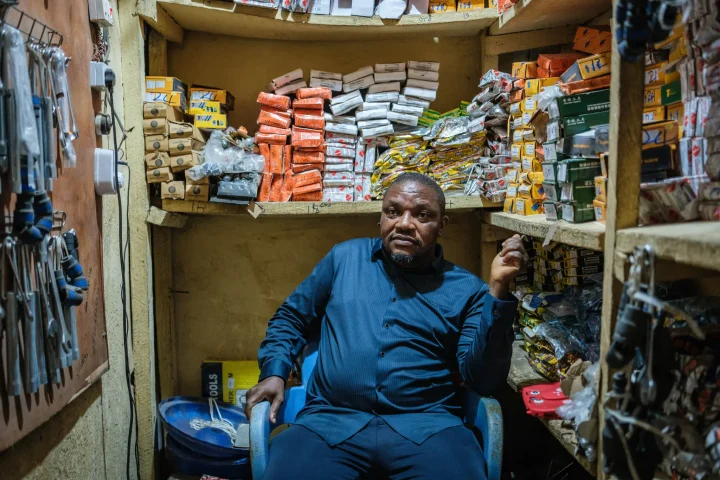
The New York Times has revealed that the United States relied on information from Emeka Umeagbalasi, a screwdriver trader in Onitsha, Anambra State, to justify air strikes in Nigeria.
In October, President Donald Trump redesignated Nigeria as a “country of particular concern” over alleged Christian genocide, declaring: “Christianity is facing an existential threat in Nigeria. Thousands of Christians are being killed.” He later threatened military intervention if Nigeria failed to act against Islamist militants.
On December 26, U.S. forces carried out air strikes on ISIS targets in Sokoto State, reportedly at Nigeria’s request. According to the NYT, Umeagbalasi, founder of the International Society for Civil Liberties and Rule of Law (Intersociety), has become an unlikely source of research for U.S. lawmakers promoting claims of Christian persecution. Senators Ted Cruz and Riley Moore, along with Congressman Chris Smith, have all cited his work.
Umeagbalasi claims to have documented 125,000 Christian deaths since 2009, drawing largely from Google searches, media reports, and advocacy groups such as Open Doors. He admitted to rarely verifying data and often assuming victims’ religion based on the location of attacks. “If a mass abduction or killing happens in an area where he thinks many Christians live, he assumes the victims are Christians,” the report noted.
Describing himself as a criminologist and “powerful investigator,” Umeagbalasi told The Sun that his methodology relies on “location and space of an incident,” which he called “one of the oldest natural methods in the world.” He further claimed that 20,000 churches had been destroyed in Nigeria over 16 years, adding: “I Googled it.”
Despite questions about credibility, U.S. officials leaned on his data to frame Nigeria as a site of Christian genocide, a narrative that influenced Trump’s decision to authorize strikes during the festive season.


