







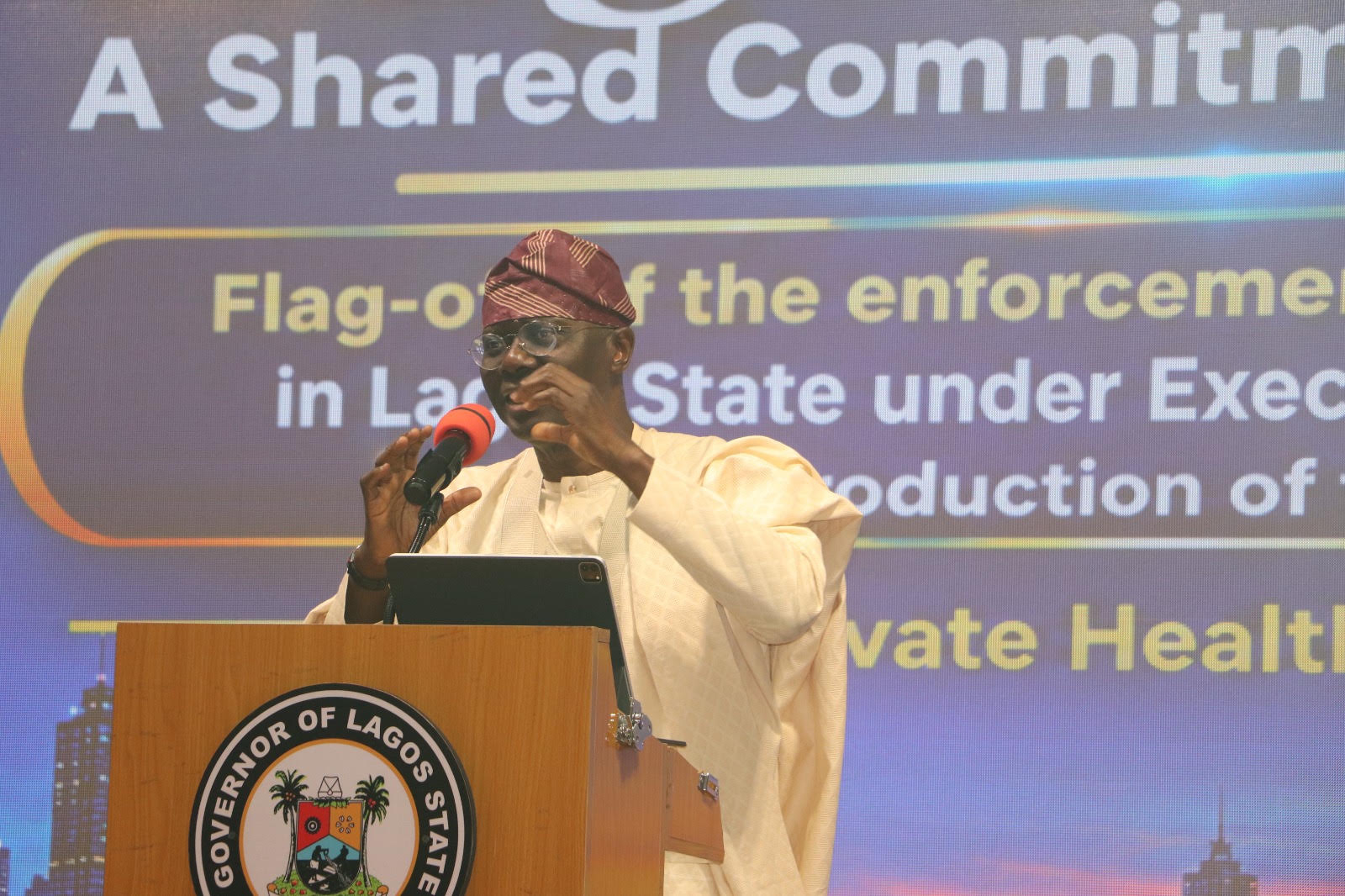
From January 1, 2027, enforcement begins. But with questions over affordability, private insurers and the cost of healthcare, what does the new policy actually mean for Lagosians?
In a bid to protect households from catastrophic medical expenses, the Lagos State Government has mandated health coverage for all residents, workers, and employers by December 31, 2026, ahead of full enforcement on January 1, 2027.
Governor Babajide Sanwo-Olu announced the deadline alongside the launch of the Lagos Private Health Plan (LPHP), aimed at corporate and salaried workers, to complement the state’s existing Ilera Eko scheme.
While rooted in a 2015 law and a 2024 Executive Order, this push focuses on enforcement. However, making insurance compulsory does not automatically ensure affordable or reliable care.
Here is a breakdown of why Lagos is taking this step, who is affected, and the ongoing disputes around implementation. SWIPE.
Why Lagos Is Making Health Insurance Compulsory
In Nigeria, people pay for most of their healthcare costs out of their own pockets. The World Health Organization (WHO) reported that in 2023, household out-of-pocket spending made up roughly 72% of Nigeria’s current health expenditure. This means families paid nearly seven out of every ten naira directly at the point of care.
Paying directly for consultations and tests turns prolonged illnesses into financial crises. To cover medical bills, households often delay care, take on debt, sell assets, or compromise on necessities like food and education.
Read Also: Nigeria’s Banks Are Closing Branches Faster Than Anyone Is Talking About
Health insurance mitigates this shock by pooling pre-paid contributions across a broad population to cover healthcare costs when illness strikes. This risk-pooling model drives Lagos State’s mandatory health scheme.
However, signing up for health insurance doesn’t guarantee full protection. True safety depends on the policy details such as what you pay, what is covered, which hospitals you can use, and if claims get paid. For Lagosians, mandatory enrollment is useless without quality coverage.
What Exactly Is The Government Introducing?
The government is positioning the Lagos Private Health Plan Partnership (LPHP) as an expansion of the existing Ilera Eko health insurance framework, not a replacement.
Here is how the system works:
• Ilera Eko (LASHMA): The core state health scheme also known as the Lagos State Health Management Agency, is designed to ensure insurance access isn’t limited to formal corporate employees. It specifically caters to informal-sector workers and vulnerable residents.
• Lagos Private Health Plan (LPHP): A new partnership with private Health Maintenance Organisations (HMOs) to broaden coverage options for salaried workers, families, and corporations.
• Employer Mandates & Broader Scope: Health insurance is legally mandatory for all Lagos residents. Employers with over five staff must register with LASHMA and enroll their workers. Coverage also extends to self-employed individuals, traders, artisans, and families.
The main challenge remains whether these plans can offer flexible pricing that accommodates varying income levels without excluding low-income residents.
The Target Is Five Times The Current Insured Population
Lagos currently has ~2 million insured residents and is targeting 10 million+ under its new expansion.
Here are the core details:
• Scale & Strategy: Commissioner for Health Prof. Akin Abayomi announced the 10 million target at the October 2026 launch. To design the new plans, licensed actuaries analyzed 2 million past enrolment and claims records to calculate risks, premiums, and financial sustainability.
• Why Pool Size Matters: A larger, diverse insurance pool (mixing healthy and sick enrolrees) spreads financial risk, lowers average costs, and provides predictable revenue for healthcare providers.
• The National Context: According to a 2026 Commonwealth Fund profile, roughly 91% of Nigerians were uninsured as of 2024, highlighting the massive coverage gap Lagos is trying to bridge.
• Key Challenge: Reaching the target requires going beyond legal enforcement as residents must see real value in the coverage, premiums must remain affordable, and enrolled members must actually access care.
What Happens To Residents Who Cannot Afford It?
The core issue is affordability as compulsory premiums risk burdening low-income earners, informal workers, and the unemployed unless a clear support system exists.
Here are the key points:
• The Equity Fund Expansion: Lagos has increased the Lagos State Health Equity Fund from ₦1 billion to ₦3 billion to subsidize coverage for 500,000 vulnerable residents alongside Ilera Eko.
• The Gap in Numbers: The 500,000 equity fund target covers only a fraction of the state’s overall 10 million insured resident goal, leaving questions about how other low-income earners will afford coverage.
• Unresolved Questions: The state has yet to clarify exact eligibility criteria, verification processes, whether subsidies cover full or partial premiums, and long-term funding sustainability.
For compulsory insurance to succeed, the state must ensure the poorest residents have a clear, transparent, and fully funded route into the system.
The Controversy That Should Complicate Implementation
On October 27, Lagos State unveiled a private health plan partnership featuring 21 participating HMOs to expand coverage.
However, Punch Healthwise reported on October 29 that key industry groups including the Health and Managed Care Association of Nigeria and the Association of Health Insurance Providers of Nigeria disputed this claim. The associations noted the scheme needs National Health Insurance Authority (NHIA) approval and warned that a proposed 13% levy could increase costs for employers and harm patient care.
This dispute requires careful context:
• Unconfirmed status: The competing claims do not prove that all 21 HMOs withdrew, that the scheme is suspended, or that the government acted illegally.
• Regulatory clarity: The roles and required approvals between National Health Insurance Authority (NHIA) and LASHMA must be publicly clarified.
• Financial scrutiny: The legal basis, calculation, and impact of the 13% levy need explanation to ensure healthcare remains affordable.
To move forward, the government must publish the verified list of HMOs, regulatory approvals, and final financial terms. The policy’s goals remain valid, but success is unlikely if key industry partners disagree on basic terms. With enforcement set for January 1, 2027, resolving these issues now is critical for implementation.
Insurance helps pay for care, but it doesn’t fix systemic healthcare issues. The success of the Lagos policy depends on real-world execution after enrolment:
• Hospital access: Plans must include accessible, local facilities to be useful.
• Prompt payments: Delayed insurer reimbursements to hospitals threaten service quality and care access.
• Clear coverage: Patients need full transparency on minimum benefits, exclusions, and out-of-pocket costs.
• Enforceable rights: Dispute mechanisms and public oversight are required to handle denied claims.
• Systemic limits: Insurance cannot resolve underlying shortages of doctors, equipment, or facilities.
True success is measured by whether insured residents actually get affordable, quality care.
What Lagosians Should Know Before The Deadline
With mandatory health insurance enforcement set for January 1, 2027, residents, employers, insurers, and healthcare providers must prepare.
If you live in Lagos, here are five critical checks:
• Confirm your scheme: Contact LASHMA regarding Ilera Eko routes, or verify participating insurers for private health plans.
• Establish total costs: Request official confirmation on premiums, family plans, payment schedules, and extra fees.
• Review benefits first: Check network hospitals, covered drugs, tests, exclusions, and claim dispute processes.
• Check workplace arrangements: Employed residents should clarify employer-employee contribution splits and dependant coverage.
• Inquire about subsidies: Ask if you qualify for support via the Health Equity Fund or Ilera Eko since eligibility is not automatic.
Official information is available via the Lagos State Health Management Agency (LASHMA) and the National Health Insurance Authority (NHIA).
Residents must seek accurate information, while the government must ensure accessible enrolment, full fee transparency, regulatory clarity, and provider accountability.
What do you think? Will mandatory insurance make healthcare affordable for low-income families, or will compliance become an extra financial burden? What critical issues must the government resolve before the 2027 enforcement deadline? Drop your thoughts in the comments section.


