





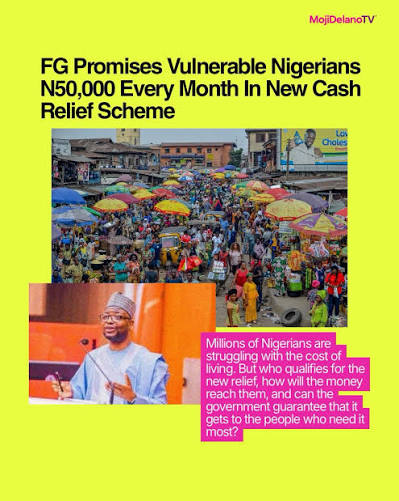
Millions of Nigerians are struggling with the cost of living. But who qualifies for the new relief, how will the money reach them, and can the government guarantee that it gets to the people who need it most?
The Federal Government has launched the National Emergency Relief and Stabilisation Intervention (NERSI), providing a monthly cash payout of ₦50,000 to vulnerable Nigerian households.
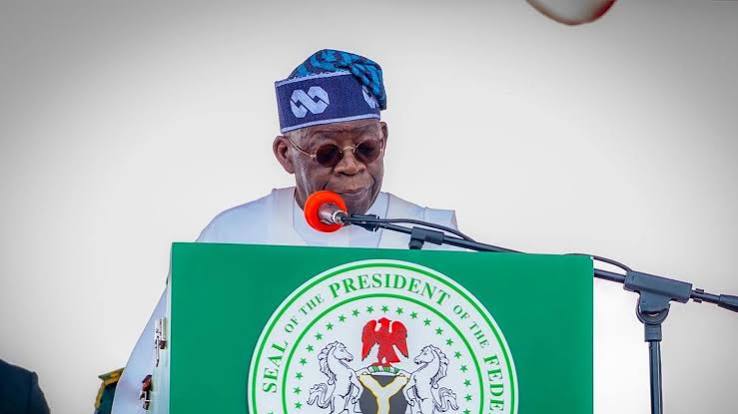
Announced on Friday, October 30, 2026, by Humanitarian Affairs Minister Dr. Bernard Doro, the presidential directive aims to cushion families against rising food prices and essential living costs.
Economic Backdrop
• Inflation Gap: September 2026 headline inflation fell to 14.63% (from 15.39% in August), but food inflation remained elevated at 19.59%.
• Household Pressure: Lower-income families allocate most of their earnings to food, transportation, rent, and utilities, meaning cooling headline inflation offers little relief.
• Reform Impact: Government economic policies, like ending fuel subsidies and letting the exchange rate float, helped the nation’s finances, but made life much harder for families by reducing how much their money can buy.
While designed to support the poorest citizens, key questions remain regarding the cash transfer’s reach, beneficiary criteria, and overall purchasing power impact. SWIPE to understand more.
How Will The N50,000 Reach Beneficiaries?
The government plans to deliver funds directly to eligible Nigerians via licensed digital financial service providers, contacting beneficiaries through SMS to request consent before depositing payments into their bank accounts or mobile wallets.
No registration fees, agents, or payments are required. This is a crucial safeguard against the fraud and extortion common in cash-transfer schemes.
However, several critical implementation questions remain:
• Who qualifies?: The announcement lacks detailed eligibility criteria, household counts, or geographical breakdowns, raising questions about how this aligns with the existing National Social Register.
• How many will benefit?: State-by-state allocations and clear numerical targets are needed beyond vague promises of “millions.”
• How will payments be monitored?: While digital delivery reduces intermediaries, robust oversight is still required to prevent payment delays, outdated records, and exclusion of vulnerable groups lacking digital access.
Ultimately, delivery channels matter less than whether the system can accurately identify eligible households and reliably transfer the funds.
Nigeria Has Done Cash Transfers Before. Did They Work?
NERSI builds on previous Nigerian cash-transfer initiatives, such as the Household Uplifting Programme and the National Social Safety Nets Project.
World Bank data shows that by September 2026, the Federal Government had disbursed approximately ₦658.9 billion in direct cash transfers to 10.46 million poor households using biometric and digital verification.
Despite this impressive scale, significant challenges persist:
• Coverage and Impact: Reaching millions does not guarantee that all eligible households are covered or that the funds are sufficient to lift families out of poverty.
• Accountability: The Auditor-General’s 2024 report noted that auditors could not verify if ₦33.75 billion transferred to ~3.3 million beneficiaries in 2023 actually reached intended recipients due to missing details and documentation. While unverified payments do not automatically equal theft, they highlight critical traceability flaws.
• Sustainability & Transparency: For the new ₦50,000 intervention to succeed, the government must ensure long-term financial sustainability while publishing verifiable data on beneficiary selection, payment records, and independent monitoring.
₦50,000 Is Significant But Can The Government Sustain It?
While ₦50,000 a month provides urgent help for basic needs, the total cost grows extremely fast:
• 1 million beneficiaries: ₦50 billion/month (₦600 billion/year)
• 5 million beneficiaries: ₦250 billion/month (₦3 trillion/year)
• 10 million beneficiaries: ₦500 billion/month (₦6 trillion/year)
The government has yet to publish verifiable targets, overall budgets, duration, or explicit funding plans for this programme.
Ultimately, while cash transfers relieve short-term pressure, they cannot fix structural poverty without investments in agriculture, infrastructure, employment, education, and healthcare.
The core test remains whether the government can deliver these funds consistently, transparently, and to the right people.
How much of a difference would a ₦50,000 monthly payout make for a struggling Nigerian household today? Drop your thoughts in the comments section.


